Fresh Herbs: Bought in a Bunch or Kept in a Pot?
Fresh herbs in a bunch or pot suit different cooking rhythms. Choose the form that stays usable for your meals, then store it to limit waste.
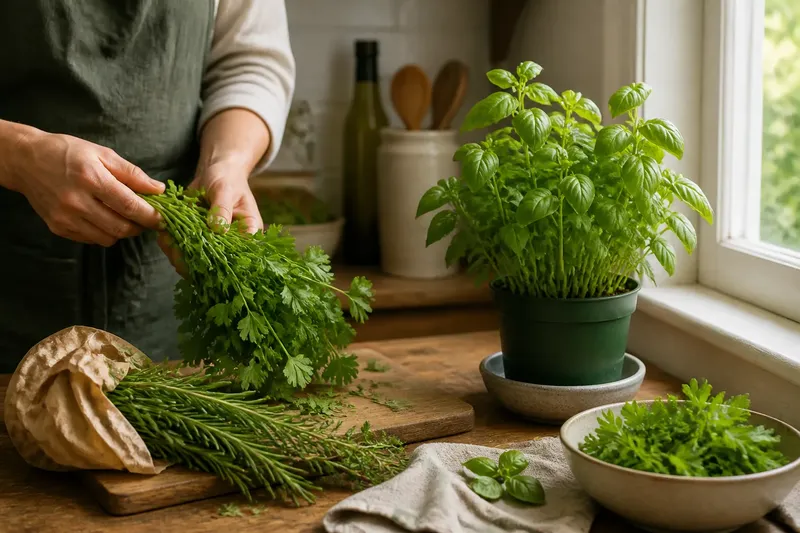
You buy cilantro for salsa, use a handful, then find a damp tangle at the back of the refrigerator. Fresh herbs in a bunch or pot present different problems: one is cut and ready to use, the other is alive but needs attention. The better choice depends less on the herb’s reputation than on how you cook and what tends to go wrong in your kitchen.
Fresh herbs, two forms
A cut bunch is a harvest with a short clock. It suits recipes that call for a generous amount at once: parsley stirred into tabbouleh, cilantro scattered over a pot of beans, or dill folded into a sauce. The stems and leaves are already separated from the plant’s roots, so the job is to keep them from drying out or turning slimy before use.
A potted herb is a living plant, usually sold in a small nursery pot. It can provide small pinches over time if it has enough light, water, and room for its roots. That is a different bargain, not a longer-lasting version of a bunch: the plant needs care, and the leaves may grow unevenly or become woody.
Choose a bunch for a recipe that will use much of it soon. Choose a pot if you regularly take small amounts and have a suitable bright spot.
Leaves wilt in the fridge
Wilted leaves usually mean the bunch lost too much moisture, while leaves turning slick or dark often point to trapped dampness. A plastic produce bag can hold condensation against tender leaves, especially if the herbs went into storage wet.
For a bunch, remove any elastic band, discard damaged leaves, and dry the herbs gently if they are damp. Wrap them loosely in a barely damp paper towel and place them in a container or bag that is not sealed so tightly that moisture collects. Basil is an exception to the cold-storage habit: it often fares better on the counter, with stems in water, away from direct sun and cold drafts.
Say you buy parsley for a dinner tomorrow and the leaves are wet from rinsing. Dry them carefully, wrap them loosely, and refrigerate them; the expected result is leaves that remain easier to pick through than a compressed, wet bundle.
Store herbs dry enough to avoid pooling water, but not so exposed that their leaves shrivel.
Stems turn slimy
Soft, slippery stems are often the result of excess moisture and poor airflow. Leaving the bunch tightly bundled, or sealing it while water still clings to the leaves, makes the problem more likely. The unpleasant smell is a useful reason to discard the affected parts rather than trying to revive them.
Inspect the bunch as soon as you bring it home. Remove any bruised or decaying stems, then choose a storage method that fits the herb: tender herbs such as cilantro and parsley can stand in a jar with a little water, loosely covered, while firmer herbs such as rosemary and thyme can be wrapped and chilled. Change the jar water if it clouds, and keep leaves above the waterline.
If only a few stems are affected, separate and discard them, then check the rest for odor and texture. If the whole bunch is slimy or smells sour, replacing it is the sensible option.
The pot looks tired
A potted herb can droop because its root ball has dried out, but constant wet soil can also stress roots. A small retail pot may dry quickly on a sunny sill, while a decorative pot without drainage can leave water sitting around the roots. Drooping alone does not identify which problem is present.
Check the soil with a fingertip before watering. If the surface and root area feel dry, water the soil and let excess drain; if the soil is still wet, wait and make sure the pot is not standing in a saucer of water. Give the plant bright light suited to the herb, and rotate it occasionally if it leans toward a window.
Harvest modestly from the growing tips rather than stripping one side bare. This keeps the plant’s shape more balanced and leaves enough foliage to continue growing. A pot is a poor choice if the only available spot is dim and watering is likely to be irregular.
Which form suits which meals?
Think about the shape of your cooking. A bunch is convenient for a dish that needs a large quantity, for a meal with several herb-heavy components, or when you want a specific herb for one occasion. It also makes sense when your kitchen lacks a bright place for plants.
A pot suits recurring small additions: a few basil leaves on toast, mint for tea, or chives snipped over eggs. It is less useful when a recipe calls for a packed cup of leaves, since harvesting that much can leave a small plant depleted. If the plant flourishes, its surplus still needs a plan; keeping a pot does not remove the question of what to cook.
Some herbs are sold both as bunches and plants, but their kitchen roles differ. Soft herbs are often used fresh and in quantity, while woody herbs such as thyme and rosemary can be added by sprig and removed later. That distinction can help you decide whether a living plant will match your usual portions.
Questions about storage?
Can fresh herbs be frozen?
Yes, though freezing changes their texture, so frozen herbs suit cooked dishes better than garnishes. Chop them and freeze in a covered container, or freeze leaves whole if you prefer to crumble them into soups and sauces.
Should I wash herbs before storing them?
Wash herbs when needed, then dry them thoroughly before storage; lingering water encourages decay. If you prefer to wash a bunch immediately, use a salad spinner or clean towel and give the leaves time to dry before wrapping.
Can I replant a supermarket herb pot?
It may be possible, but a crowded root ball can make the plant struggle in its original container. A roomier pot with drainage and suitable potting mix gives roots space; separate plants only if they can be teased apart without excessive damage.
When should I replace a pot with a bunch?
Use a bunch when the plant repeatedly wilts, grows poorly in the available light, or cannot supply the quantity your recipes need. Fresh herbs in a bunch or pot are both useful choices; the right one is the form that fits your portions, storage habits, and room for care.
Match the purchase to the recipe
Before shopping, look at the next few meals rather than buying a pot on the promise of indefinite leaves. If one recipe needs a large handful, buy a bunch and plan to use the remainder in another dish, a dressing, or a cooked sauce. If small pinches appear in your meals regularly and a bright window is available, a pot may earn its place on the sill.
Check the herb’s condition at purchase: leaves should look reasonably firm, stems should not feel slimy, and a pot should not sit in waterlogged soil. Once home, store cut herbs with attention to moisture and airflow, and treat a potted plant as a plant rather than a jar of endlessly replenished garnish. That modest distinction is often enough to keep dinner’s green bits out of the compost.