Why Meals Often Begin with a Shared Dish
Why meals often begin with a shared dish: learn when passing food builds a sense of occasion and when separate portions make the table easier.
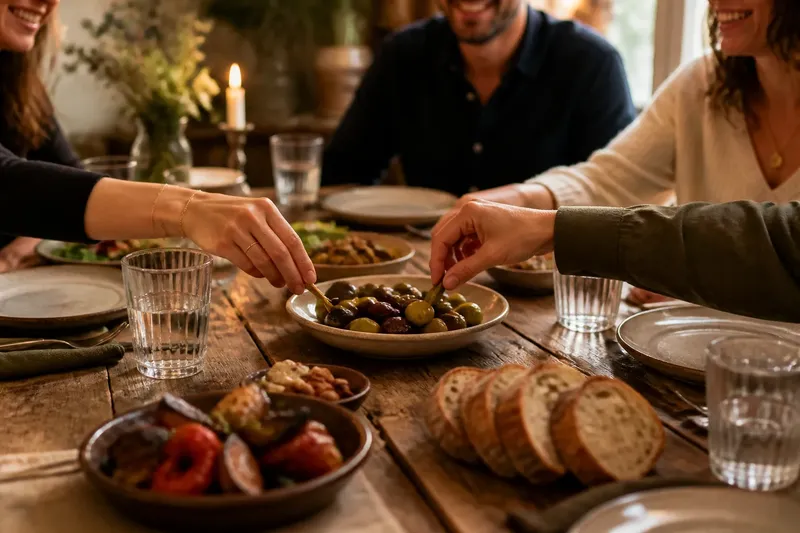
A bowl of olives lands between the water glasses, and hands reach toward it before anyone has taken a seat. Why meals often begin with a shared dish has less to do with a rule about hospitality than with what that first bowl asks people to do: pause, notice one another, and take part in a common meal.
That small invitation suits some tables better than others. A shared dish can make a meal feel collective, but it can also complicate serving, diets, or a guest’s comfort. The useful choice is not shared or individual in the abstract; it is which arrangement fits the people and the moment.
When the table is settling
If guests arrive at roughly the same time and the meal will unfold at a relaxed pace, a shared opening dish can give the room a gentle first task. Bread, sliced fruit, pickles, or a plate of roasted vegetables lets people begin without requiring a formal announcement or a fully served course.
The dish also gives attention somewhere to go. A guest who is new to the group can take a piece, pass the plate, or wait; all are ordinary ways to join in. The food does not have to carry a grand cultural meaning. Its placement does the work.
Choose this arrangement when conversation matters more than precise timing. Put the dish where everyone can reach it, with a serving utensil if the food needs one, and leave enough room for glasses and elbows.
When portions need clarity
Separate servings fit a meal where each person needs to know what is on their plate or how much is available. This may be useful when guests have different appetites, when a dish contains ingredients some people avoid, or when the meal is brief and there is little time for passing bowls around.
Individual portions can also remove the awkward arithmetic of a scarce favorite. If one small dish is meant to feed a table, some guests may hesitate while others help themselves. Serving it directly makes the allocation visible, though it can feel more formal than the food warrants.
Use separate plates when ease and clarity are the main concerns. A shared table does not require every item to be communal.
When guests have different needs
A mixed table often calls for both formats. Keep a dish that suits everyone in the center, then serve foods with more specific ingredients or preparation separately. This avoids turning every plate into a negotiation while preserving a common point of contact.
Say you are hosting a small dinner where one guest avoids dairy and another dislikes spicy food. You could set out plain bread and a bowl of mild vegetables for everyone, then offer a spicy sauce and a cheese-based dish in separate, clearly placed bowls. Guests can choose their own additions, and the shared center remains usable without making anyone explain a preference.
Where a dish’s ingredients matter, say what it contains in a straightforward way. A small card or a quiet mention is often enough; there is no need to make a guest’s dietary choice the evening’s main subject.
When passing feels natural
Passing food works best when the table has enough space and the dish is easy to handle. A shallow platter, a stable bowl, and a serving spoon make the action simple. A tall, hot pot or a plate balanced on a crowded table may ask more of guests than the meal needs.
Consider the direction of movement, too. If people are seated closely, place the dish within reach of the person best positioned to start it and let it travel from there. No one needs to enforce a strict route; the point is to make offering and accepting comfortable.
For a very small table, a shared plate can be easier to pass than a large serving bowl. For a long table, two smaller dishes may keep the food accessible without turning one guest into the evening’s designated courier.
When formality matters
At a formal meal, individual servings can make the sequence easier to follow. Guests do not have to guess when to reach across, and the host can serve a dish at a consistent temperature. Shared elements can still appear as a first course or a bread plate, but they need not define the whole meal.
At a casual meal, a central dish may make the table feel less staged. People can take what they want and keep talking, provided the food is designed for that kind of handling. The choice depends less on whether the meal is “proper” than on whether its arrangement matches the mood the host wants.
If the gathering includes people who do not know one another, a modest shared dish can offer an easy opening. If guests would rather keep their plates and space their own, individual servings are just as hospitable.
Shared dishes and first bites?
Why put food in the center?
A central dish gives guests a small, voluntary way to participate before the meal is fully underway. Passing it can create a sense of shared attention without requiring everyone to eat the same amount.
Does everyone need to use the same serving utensil?
No; the utensil should suit the food and the guests’ comfort. Provide a serving spoon or tongs when they help keep the dish easy to serve, and avoid making one utensil a point of etiquette.
What if someone does not want to share?
Offer an individual portion or let the guest take food without comment. Sharing is an invitation, not a measure of friendliness or belonging.
Can a meal mix shared and individual food?
Yes, and that often makes the arrangement more flexible. A common bread plate or vegetable dish can sit alongside separately served mains, sauces, or foods with ingredients that matter to particular guests.
When the room is crowded
A shared dish should not make the table harder to use. If the table is narrow, place a small plate at each end or serve the food in a few portions rather than setting one large bowl among the glasses. Keep hot dishes on a stable surface and let the host serve them if moving them around would be awkward.
For a meal eaten on a sofa, at a picnic, or around a low table, individual plates may be more practical than a communal platter. Food that drips, crumbles, or needs careful cutting is not improved by an ambitious passing routine. Napkins and a steady place to set a plate can be more welcoming than ceremony.
Choose the format that leaves people able to eat comfortably, not merely one that looks generous in a photograph.
What the first dish signals
The opening dish sets a quiet expectation. A bowl of nuts or a plate of sliced pears says that people can begin at their own pace. A carefully portioned starter says that the host is guiding the meal. Neither message is inherently warmer; each can be considerate in the right room.
Think about whether guests should help themselves, wait to be served, or simply have something available while they settle. Then choose food and placement that make that expectation legible. A shared dish is most useful when its invitation is clear and there is no penalty for declining it.
When deciding why meals often begin with a shared dish, consider the particular table rather than an imagined universal custom. If passing food will help people meet the meal together, set out a dish that is easy to reach and easy to refuse. If it will add friction, serve the food separately and let the gathering become collective in other ways.